Understanding the Major Food Groups and Their Nutritional Contributions
A systematic overview of the principal food categories, their general nutritional characteristics, and their role in a varied and balanced dietary pattern.
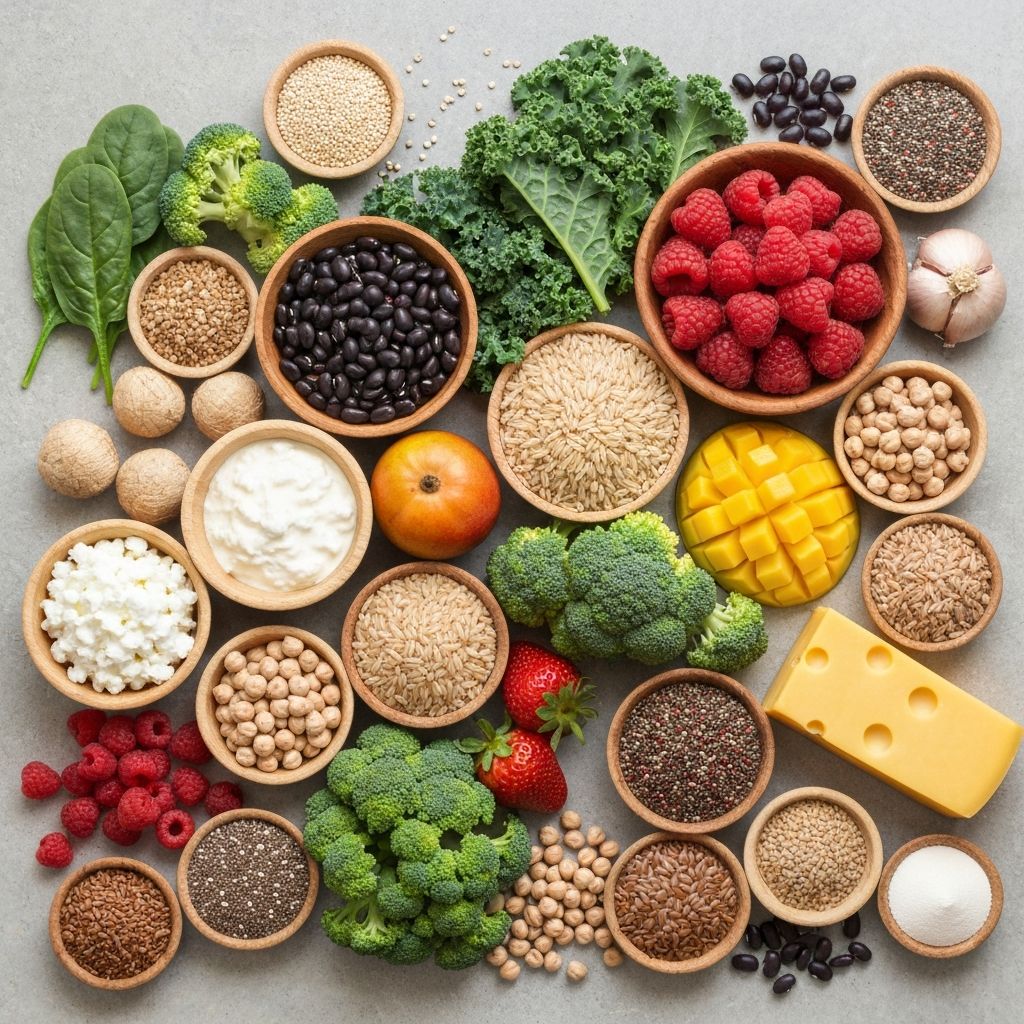
The Concept of Food Group Classification
Food group classification is a framework developed within nutritional science to organise foods according to their shared compositional characteristics. By grouping foods that provide broadly similar nutrients together, this system offers a conceptual tool for understanding the range of nutrients available through diet and the role that variety plays in overall dietary composition.
It is worth noting that food group classifications are not universal — different national health bodies and dietary guidelines apply different categorisation schemes, and the specific number and definition of food groups can vary. The classification presented here draws upon widely documented categories used in nutritional education, including those referenced by UK public health institutions.
The value of classifying foods into groups lies primarily in its utility as a communication tool. Rather than specifying precise nutrient requirements for individuals — a task requiring individual assessment by qualified professionals — food group frameworks help convey the principle that dietary variety across different categories is associated with broader coverage of essential nutrients.
This article provides a descriptive overview of each major food group: what it contains, what nutritional components it is known to contribute, and how it fits within a general understanding of dietary patterns. This is purely an informational exposition and does not constitute dietary guidance.
Food Group Matrix
Fruits
Fruits are the seed-bearing structures of flowering plants and represent one of the most compositionally diverse food categories. They vary considerably in their content of naturally occurring sugars (principally fructose, glucose, and sucrose), water, dietary fibre, vitamins, minerals, and phytochemicals.
From a nutritional standpoint, fruits are commonly associated with their vitamin C content, though specific levels differ widely by species. Berries, citrus fruits, kiwi, and guava represent examples of fruits with well-documented vitamin C concentrations. Fruits also provide potassium, folate, and a range of polyphenolic compounds — secondary plant metabolites that are the subject of considerable ongoing research.
Fibre and Sugar Composition
The natural sugar content of fruits is accompanied by dietary fibre — both soluble and insoluble forms — which affects the rate at which sugars enter the bloodstream compared to isolated sugar sources. The combination of water, fibre, and micronutrients in whole fruits places them in a nutritionally distinct category from foods containing equivalent amounts of refined or extracted sugars.
Vegetables
Vegetables constitute the broadest and most compositionally heterogeneous food group, encompassing edible leaves, stems, roots, flowers, seeds, and bulbs from a wide array of plant species. Their nutritional profiles vary considerably by botanical family, plant part, and preparation method.
As a category, vegetables are associated with contributions of dietary fibre, vitamins A, C, E, and K, as well as B vitamins including folate, and minerals such as potassium, calcium, magnesium, and iron. The bioavailability of specific nutrients from vegetables depends on the form of the vegetable (raw versus cooked), the specific variety, and individual digestive factors.
Phytochemicals in Vegetables
Vegetables contain a wide range of phytochemicals — non-nutritive plant-derived compounds that are structurally diverse and include carotenoids, flavonoids, glucosinolates, and organosulfur compounds. These compounds are increasingly studied for their biochemical activity, though their roles in human physiology involve complex metabolic pathways that research continues to characterise.
Grains and Cereals
Grains and cereals — the edible seeds of grass species — form the dietary energy foundation in many food cultures globally. They are characterised primarily by their carbohydrate content, in the form of starch, though they also contribute protein, B vitamins (notably thiamine, riboflavin, niacin, and folate), dietary fibre (particularly in whole grain forms), iron, magnesium, and zinc.
Whole Grains Versus Refined Grains
A structural distinction of nutritional significance within this group is that between whole grains and refined grains. Whole grain foods retain all three layers of the grain kernel: the outer bran layer (rich in fibre and B vitamins), the starchy endosperm (the main energy component), and the germ (containing fat-soluble vitamins, essential fatty acids, and some minerals). Refining processes that remove the bran and germ alter the nutritional composition of the resulting product, reducing its fibre, vitamin, and mineral content relative to the whole grain form.
Common Cereal Grains
Wheat remains the most widely cultivated and consumed cereal grain in the United Kingdom, providing the basis for bread, pasta, and many other staple foods. Rice, the predominant staple in much of Asia, is a significant component of global dietary patterns. Oats are notable for their content of beta-glucan, a soluble fibre type that has been extensively studied. Barley, rye, maize, and lesser-known grains such as sorghum, millet, and teff also contribute to dietary diversity and are important in various regional and cultural food traditions.
Protein-Rich Foods
Animal Sources
Meat, poultry, fish, shellfish, and eggs are categorised as animal-derived protein sources. Animal proteins are generally characterised as complete proteins, meaning they contain all nine essential amino acids in proportions that meet human requirements. Fish — particularly oily varieties such as salmon, mackerel, and sardines — also provide omega-3 long-chain polyunsaturated fatty acids (EPA and DHA), nutrients that receive particular attention in nutritional research.
Plant Sources
Legumes (beans, lentils, chickpeas, soya), nuts, seeds, and certain grains serve as plant-derived protein sources. Many plant proteins are described as incomplete because they may be limited in one or more essential amino acids, though consuming a variety of plant protein sources across the diet can address this limitation. Soya protein is an exception among plant sources, providing all essential amino acids in adequate proportions.
Contextual Considerations
The protein group is one of the most compositionally variable food groups. Beyond protein content, foods within this category differ substantially in their fat composition, micronutrient profiles, and other dietary constituents. Iron bioavailability, for instance, differs between haem iron sources (animal products) and non-haem iron sources (plant products), and is influenced by other components present in the same meal.
Dairy Products and Alternatives
The dairy group traditionally comprises milk and milk-derived products including cheese, yogurt, and butter. Dairy products are noted for their calcium content, as well as contributions of protein, phosphorus, vitamin A (in full-fat varieties), vitamin D (in fortified products), iodine, and B vitamins including riboflavin and vitamin B12.
Plant-based dairy alternatives — including milks made from soya, oats, almonds, rice, and other sources — have grown considerably in prevalence. The nutritional profile of plant-based milk alternatives varies considerably by source and formulation. Many commercially available plant-based milks are fortified with calcium, vitamin D, and vitamin B12 to align more closely with the nutritional characteristics of cow's milk, though the bioavailability of added nutrients may differ from that of naturally occurring counterparts.
Fermented Dairy Products
Yogurt and certain cheeses are produced through microbial fermentation processes. Fermented dairy products may differ from unfermented counterparts in their content of live microbial cultures, lactose levels (partially broken down during fermentation), and specific organic acids produced during fermentation. The contribution of fermented foods to the gut microbiome is an active area of research.
Fats and Oils
Fats and oils are energy-dense compounds composed primarily of fatty acids and glycerol. As a food group, they contribute fat-soluble vitamins (A, D, E, and K), essential fatty acids that the body cannot synthesise independently, and a highly concentrated source of dietary energy.
Fatty Acid Classification
Dietary fats are broadly classified according to the degree of saturation of their constituent fatty acids. Saturated fatty acids contain no double bonds and are found predominantly in animal fats and some tropical plant oils (coconut, palm). Monounsaturated fatty acids contain one double bond; olive oil and rapeseed oil are widely cited sources. Polyunsaturated fatty acids contain multiple double bonds and include the omega-6 and omega-3 families, which are considered essential as they cannot be synthesised by the human body.
Trans Fatty Acids
Trans fatty acids can be produced through partial hydrogenation of vegetable oils — an industrial process — as well as occurring naturally in small quantities in ruminant animal products. Industrially produced trans fats have been substantially reduced or eliminated from the food supply in the UK following regulatory action, though their distinct chemical configuration and their distinction from naturally occurring trans fats remain relevant to compositional understanding.
Information Context and Limitations
This article provides a descriptive overview of major food groups as documented in nutritional science literature. Classifications and nutritional characteristics described here are presented at a general level and do not account for individual variation in nutrient requirements, absorption, or health conditions. This content does not constitute dietary advice and is not intended to guide individual food choices. Decisions regarding dietary composition are best made in consultation with a qualified healthcare or nutrition professional.
Explore Related Articles
Macronutrients Explained
Carbohydrates, proteins, and fats — their structure, classification, and biological roles in the body.
Read the Full ArticleDietary Fibre in Digestive Function
Understanding soluble and insoluble fibre — their structural roles and documented physiological functions.
Read the Full ArticleThe Role of Hydration
Water's multifaceted role in the human body — nutrient transport, temperature regulation, and metabolic processes.
Read the Full Article